



Tube Cutting Tools and Other Essential Fluid System Tools
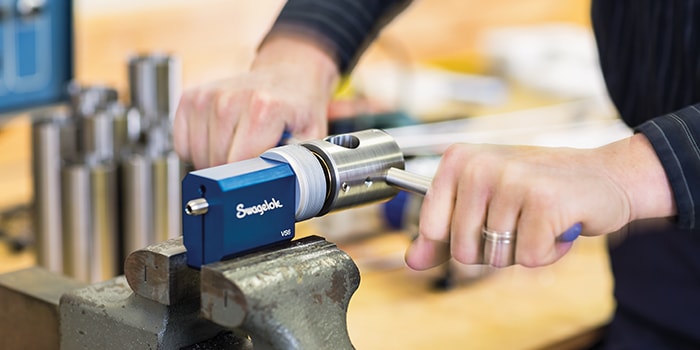
Proper Tube Cutting and Welding Tools Support Reliable Fluid System Assembly and Maintenance
.ashx?h=144&w=112&hash=9EC2274FC726A667C2F09B48DBA79CA6 "Roger Bott, Technical Service Engineer and Certified Welding Inspector, Swagelok")
Fluid systems range from simple to complex in plants worldwide, and many factors go into their safe, profitable operation. For each of these systems, proper assembly and ongoing maintenance require common, critical tools and equipment with which operators and technicians should be familiar. Important items like tube cutting tools, tube deburring tools, tube benders, and more should always be readily available.
But it is possible that tools and equipment might not always be at the top of your priority list. Have you ever grabbed whatever tool was available in a pinch? Do you have the right tube cutter at the ready? Making a choice like this can potentially cost you. Fluid systems rely upon leak-tight, long-lasting connections—and the right tube/tubing tools are required to make them.

Five Essential Fluid System Tools Every Professional Needs
#1 Which Tube Cutting Tools Should Be Readily Available?
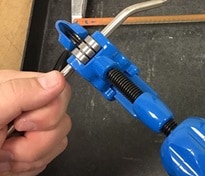
#2 Why are Tube Deburring and Tube Facing Tools Important?
After properly cutting a tube, tube deburring tools and tube facing tools provide the clean, square tube ends essential to leak-tight connections at every point in an application. Simple tube deburring tools should be kept alongside hand-held cutting tools to deburr stainless steel, steel, and hard alloy tube ends. Other more sophisticated tube facing equipment can help you achieve flat, smooth, square, burr-, and chamfer-free tube ends on a variety of alloys.
Watch this step-by-step instructional video on how to use Swagelok’s tube cutter and tube deburring tool:
#3 What is Preswaging Equipment and When is it Used?
Preswaging tools can be convenient for tube fitting installations across many applications. A few different kinds of this equipment are available, including gaugeable, manual preswaging tools. These tube swaging tools allow the operator to preswage a nut and ferrule set onto the tubing and then use a gap inspection gauge when completing the final installation. For refineries or plants that need to perform a high volume of preswages daily, semiautomatic equipment is also available and recommended to increase efficiency.
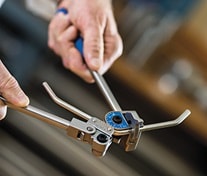
#4 What Types of Tube Bending Equipment Should Be on Hand?
#5 Why Should You Consider Orbital Welding for Connections?
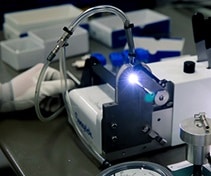
While manual welding is a highly skilled and careful process, for permanent connections or for critical and potentially dangerous fluids or cases, advancements such as orbital welding equipment can make the process more precise and consistent.
Considerations When Purchasing Tube Cutting and Precision Welding Tools
Tube and fittings are designed to strict tolerances and specifications. Particularly in critical applications, they must be handled precisely to ensure safe and reliable operation. The operator’s or technician’s choice of tools and equipment is a major part of the equation. It is also recommended to use tools supplied by tube and fitting manufacturers; for example, Swagelok offers a variety of solutions such as tube cutting, bending, preswaging equipment, and more that are designed specifically to work with Swagelok tube and fittings. Choosing the tools most compatible with critical componentry can help minimize potential problems. In addition, it is recommended to avoid intermixing fluid system components manufactured by different vendors to ensure the best possible compatibility.
Benefits of Choosing a Supplier Offering Quality Assurance and Calibration Services

Because manufacturing and processing environments are often physically large spaces, operators and technicians must be sure they have the right tools on hand to efficiently make the correct fix when working in or around the plant.
This is not always the case when a repair takes place in the field. For example, operators and technicians may find themselves changing out a tube fitting without the proper tube deburring tool in their tool bag. They may resort to another option they do have on hand, like a rasp or a file.
This might work in a pinch, but it is more advisable to return to the tool area and obtain the correct facing tool or deburring tool to create a reliable connection. Ensure plenty of these tools are available to those who may need them to help create an environment where the right equipment is being used every time.
For more complex equipment, breakdowns and occasional calibration needs can cause interruptions. An orbital welding system requiring a repair, for instance, means critical connections cannot be made and can lead to significant downtime for the entire plant. Choosing a supplier that offers quality assurance and calibration services can be beneficial. Some suppliers will also offer temporary replacement systems while a repair is being performed.
Supplier Support Can Improve Plant Operations
The right equipment supplier is more than just a vendor. Working with a single supplier for tube fitting componentry and the right tools and training for the job can help refineries ensure that quality connections are being made at every critical point in the plant.
Want to learn more about sourcing tools and equipment? We are ready to help. Get in touch to learn more about all tubing and tubing accessories that we offer.

Related Articles
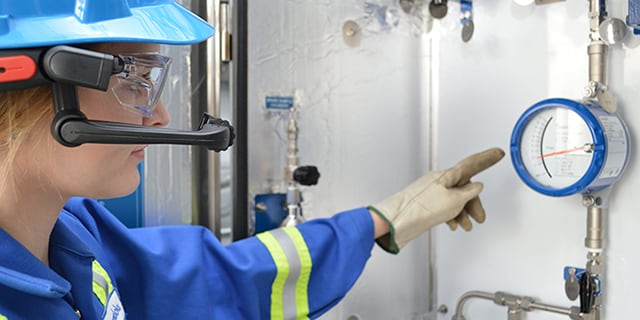
Your Industrial Fluid System Safety Checklist
Follow these best practices to enhance the safety of your industrial fluid system.
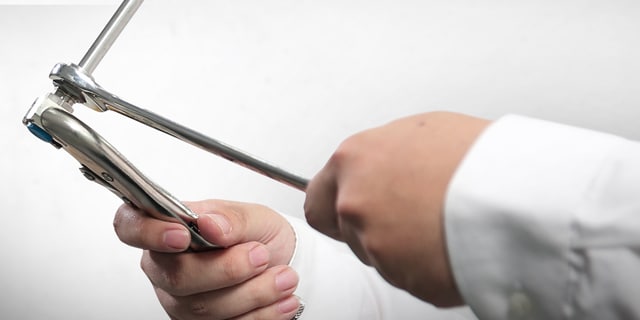
How to Install Tube Fittings
Learn how to install tube fittings using the proper fitting installation techniques in order to improve facility safety, reliability, and profitability.
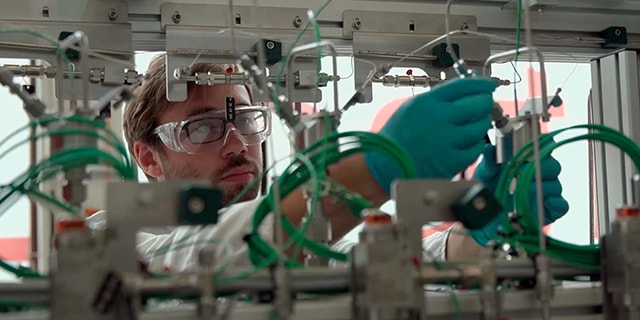
Tackling Practical Performance Issues in Fluid and Sampling Systems
Learn practical tips on how to improve the performance and accuracy of your fluid and sampling systems from Swagelok.